Answer Engine Optimization (AEO): Your Business Shortcut to Being Found
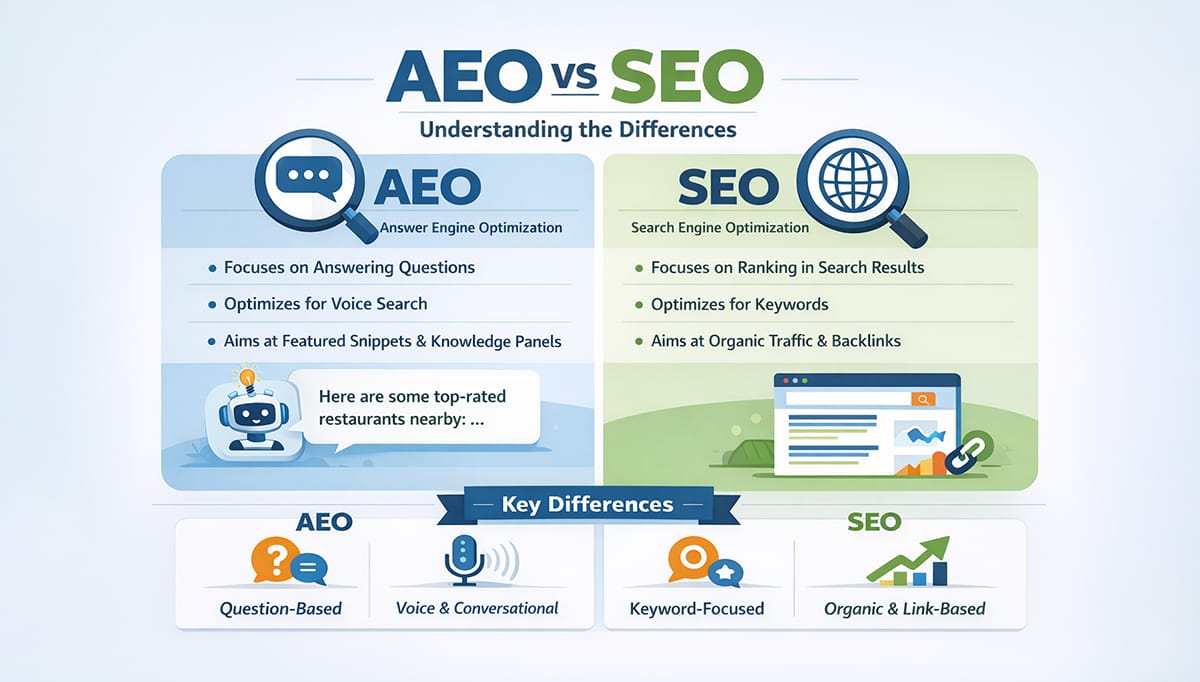
In this rapid digital age, users no longer want to tediously browse through multiple links to find what they need. Instead, they expect immediate answers, often without even clicking on a website. Search experiences powered by platforms like Google now prioritize instant responses through featured snippets, AI-generated summaries, and voice search results.
Understanding how answer-driven content works gives companies a competitive edge, while ignoring it can mean being left behind. When competitors dominate these answer boxes, your website’s organic reach can suffer, and attracting new clients becomes almost impossible.
Hence, Answer Engine Optimisation (AEO) is key for businesses looking to stay visible in today’s search landscape. This guide will explain what AEO is, why it matters in modern digital marketing, how it works, and the emerging trends shaping the future of search.
What is Answer Engine Optimization (AEO)?
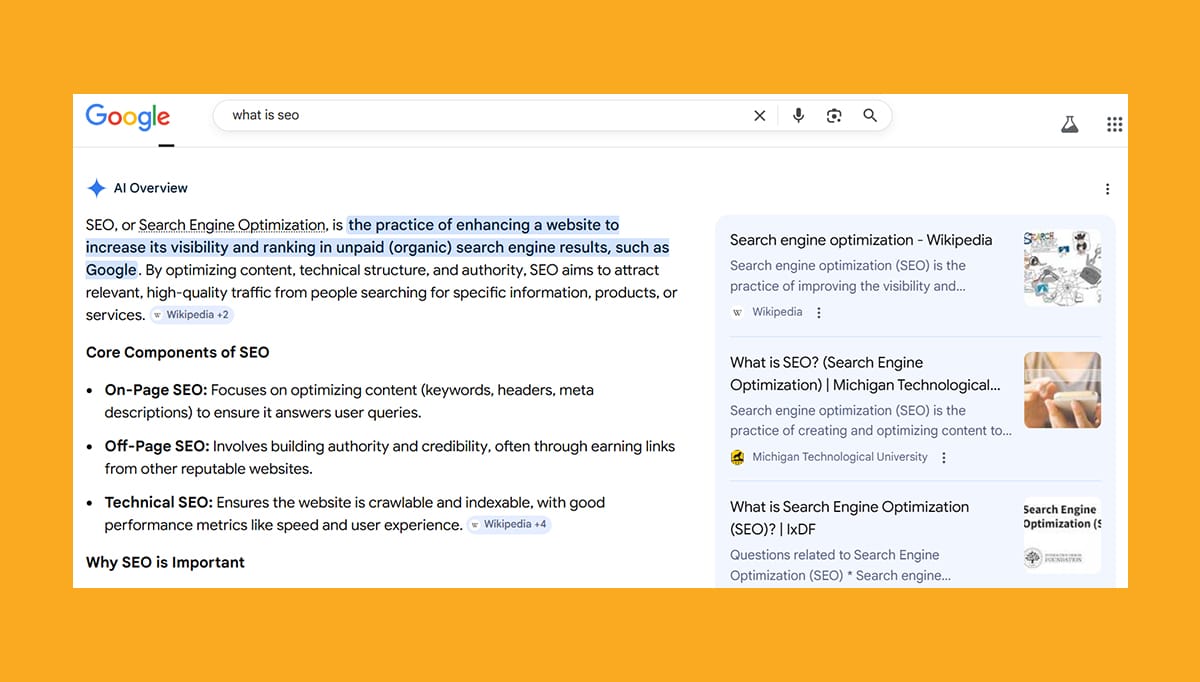
Imagine a potential customer looking for a quick explanation of what SEO means. When they search online, Google’s AI Overview appears at the top of the page, providing a concise, clear answer. Delivering this type of immediate response is exactly what Answer Engine Optimization (AEO) does.
AEO is the practice of optimizing content to appear as direct answers in featured snippets, AI-generated overviews, knowledge graphs, voice search, and AI-powered answer engines like ChatGPT, Microsoft Copilot, and Perplexity AI. It prioritizes clarity, usefulness, and machine-readable meaning, focusing on user intent and experience, with success measured by visibility in answer-based results rather than clicks or rankings.
What is Search Engine Optimization (SEO)?
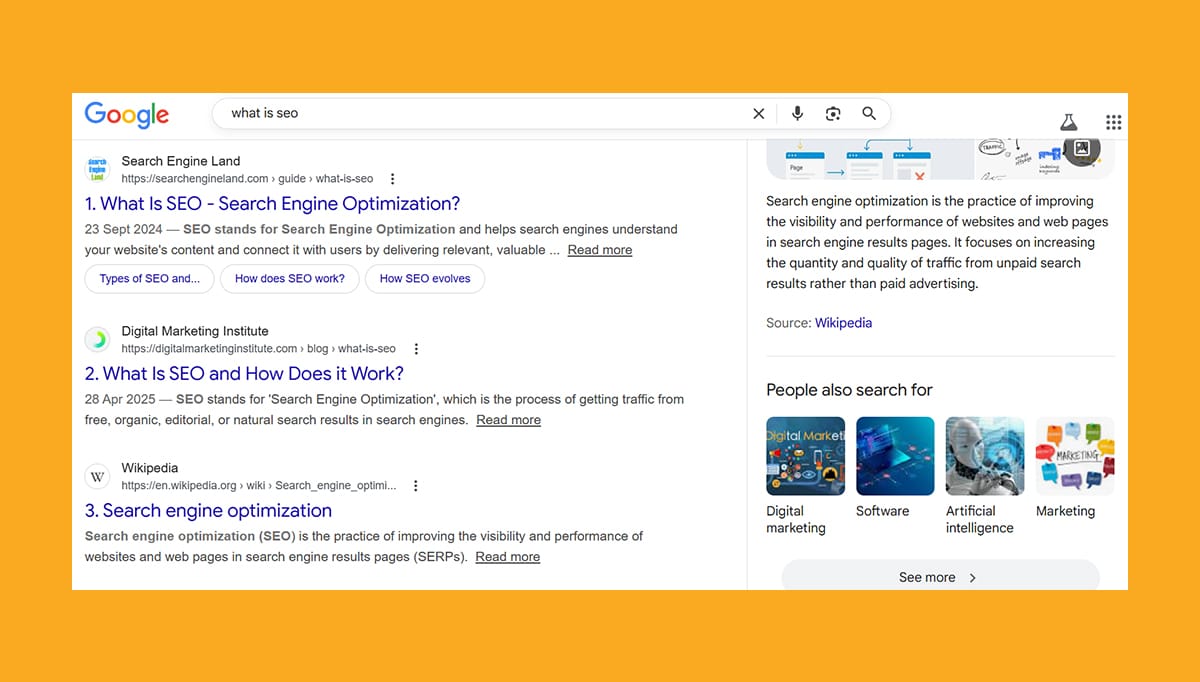
Using a similar example, when you enter a query into a search engine and scroll past the AI Overview, the top results display the websites Google considers most relevant to what users are looking for. Search Engine Optimization (SEO) involves improving a website’s content, structure, and relevance so that search engines like Google rank it higher in the search engine results pages (SERPs), increasing the chances that users will click through and visit your site.
A smart SEO strategy works across every stage of the marketing funnel. It helps attract organic traffic during the awareness stage, engages users in the consideration stage, and supports conversions during the action stage.
Why Does AEO Matter for Businesses Now?
While businesses usually need more traffic coming to their website, AEO is a beneficial area to focus your efforts on because of these factors:
- Changing User Behavior: As users now expect quick, direct answers instead of browsing through multiple links, appearing in these answers is an effective way to capture attention online and increase your business’s popularity among users. Scoring a listing in AI platforms helps guide users into perceiving your brand as the most relevant and reliable solution they can look for.
- Rise of AI and Conversational Search: AI-powered tools have transformed search into a more interactive, dialogue-driven experience. When your brand appears in AI-generated responses, it feels more relatable and trustworthy to users due to the conversational nature of these platforms. This makes AEO essential for businesses to invest in, as it functions like a free digital endorsement for your products or services.
- Zero-Click Searches Start Dominating: Answers are increasingly displayed directly in search results, reducing the need for users to click through the links to get information. A clear example is Google’s AI Overview, which appears automatically when users search for information. To invest in AEO is to get your business’s name, services, or link featured in this visible sweet spot, right where users are searching for solutions to their problems.
How Does AEO Work?
AEO uses a combination of techniques to optimize your business’s content, making it more likely to deliver direct, accurate answers to users’ questions. These components are as follows:
1. Understanding User Intent and Optimizing Content Around It
The first step in effective AEO is understanding what users are looking for. Research common questions in your industry through FAQs and “people also ask” sections, focusing on queries with words like “how,” “what,” “why,” “can,” or “should” to identify clear intent.
Businesses can also leverage internal data from customer interactions to spot information gaps. Combining these insights with search trends allows you to optimize your content, increasing the chances of appearing in featured snippets, knowledge panels, and AI-powered answers.
2. Structuring Data and Schema Markup
Without a schema, search engines interpret your website with vagueness, as they try their best to figure out what’s important. Schema markup gives AI systems a clear way to understand and label important details.
Schema.org provides the standardized vocabulary used to implement markup in AEO. It includes predefined tags and types (like Person, Product, or FAQPage) that webmasters can add to their HTML to explicitly communicate the meaning of their content to search engines.
For AEO, the most useful schema types include:
- FAQPage: Marks question-and-answer pairs for featured snippets.
- HowTo: Highlights step-by-step guides for direct answers.
- Article: Defines the main content of a page for better indexing.
- Speakable: Optimizes content for voice search responses.
- LocalBusiness: Provides essential business details like address, hours, and contact info.
This structured approach ensures search engines and AI can accurately interpret your content, causing them to favour and display it as concise, relevant answers.
3. Voice search optimization
Voice queries are longer and more specific in nature. This is why your content needs to cater to voice search as well, because of this difference. As spoken questions often include extra context or intent, AEO content needs to anticipate these detailed queries to provide clear, accurate answers. Here are some aspects to keep in mind:
- Conversational Language: Craft content that reflects how people ask questions verbally.
- Long-Tail Keywords: Target longer, specific, question-based keywords commonly used in voice searches.
- Local SEO: Optimize for local intent, such as “restaurants near me,” by updating your Google My Business profile and local citations.
- Question-Based Content: Make sure your content directly answers common queries, as voice assistants often pull responses from featured snippets or knowledge panels.
4. Knowledge panel, graphs, and entities
To optimize for AEO, it is important to first understand how knowledge panels, graphs, and entities work:
- Knowledge Panel: An information box that appears in search results to provide quick, authoritative information about people, places, organizations, and concepts.
- Entities: The subjects shown in knowledge panels are called entities.
- Data Source: Information is pulled from an entity graph.
- Entity Graph: A network of interconnected information that maps relationships between different entities.
When users ask questions through voice assistants or AI interfaces, these systems first identify the entities in the question, then determine the most reliable sources for information about them. Brands and websites recognized as trusted, authoritative entities are more likely to be cited as sources, making entity recognition a critical component of effective AEO.
5. Off-site presence and authority building
AEO involves off-site factors that are also crucial in establishing credibility and authority with answer engines.
Start by claiming and optimizing your business listings on major platforms that feed information to answer engines. Accurate, consistent listings help search engines trust your business and increase the chances of your content being featured as a direct answer.
Additionally, demonstrate expertise, experience, authoritativeness, and trustworthiness (E-E-A-T) by highlighting credentials, earning mentions in reputable publications, and providing content backed by data or expert review. Establishing your brand as a trusted source signals to search engines that your answers are reliable and should be surfaced.
Strategies for effective AEO
- Write in a Conversational Tone: Use natural, easy-to-read language that matches how users ask questions.
- Add FAQ Sections or Question-Based Headings: Include these sections on your website to address common queries directly.
- Use Structured Data: Implement schema markup so search engines can clearly understand and present your answers instead of misinterpreting them.
- Keep Answers Short and Direct: Provide the answer upfront by placing a concise answer (about 40-60 words) at the beginning of the relevant section.
- Content Creation is Essential: AI favors in-depth content from multiple angles, regularly updated domains, predictable formatting, and proper schema markup. If you don’t put your content out there, AI has nothing to pull from, meaning your brand or website may not be recognized at all in answer-driven search results.
- Incorporate Entity-Based SEO: Highlight key topics, names, and concepts to help search engines connect your content to relevant queries.
- Favor Lists and Tables: Organize information in lists or tables to make it easier for search engines and users to digest.
- Maintain Accuracy and Relevance: Regularly update content to ensure it remains correct and up-to-date. This kind of information is favoured by users.
- Target Long-Tail Keywords: Long-tail keywords are specific, detailed search phrases. Optimizing for them helps your content match full-sentence and niche queries more precisely.
- Integrate AEO Efforts with SEO Efforts: Traditional SEO optimizations are still crucial for visibility and ranking, even as AEO grows in importance. Both strategies complement each other and work together, rather than functioning as separate entities.
How to Measure and Optimize Your AEO Efforts
AEO, like any digital marketing strategy, is ongoing and requires constant monitoring and refinement. Here are some actionable ways to track and measure your efforts:
- Featured Snippet Performance: Track how often your content appears in featured snippets. These occupy the most visible location in search results.
- People Also Ask (PAA) Placements: Monitor if your content appears in the PAA boxes. Being featured here increases the chances of capturing user attention for related queries.
- Voice Search Results: Check if your content is being pulled for voice queries. Voice search is growing, and appearing here means your content is optimized for conversational search.
- AI Citations and Mentions: Track when AI platforms reference your content. This shows authority and helps your content reach users through AI-powered answer engines.
- Zero-Click and Branded Traffic: Measure traffic that interacts with your brand through direct answers without clicking. It indicates your visibility in answer-driven results.
- Local Pack and Map Results: For businesses with local intent, track appearances in Google’s Local Pack and maps, which drive foot traffic and local engagement.
- Monitor Competitors: Keep an eye on competitors’ AEO performance to identify opportunities and gaps in your own strategy.
- Analyze User Behavior: Use tools like Google Analytics to see if traffic from AEO features is more engaged, with lower bounce rates, higher time on page, and more conversions.
- Refine Your Answers: Continuously update and improve your content based on these insights to maintain visibility, relevance, and authority in answer-driven search results.
Is AEO replacing SEO?
No, AEO does not completely replace SEO, but it is an evolution of SEO that focuses on how content is surfaced in direct answers, AI summaries, and voice search.
Traditional SEO still matters for driving traffic, improving rankings, and increasing visibility in search results pages. AEO complements SEO by optimizing content to appear as instant answers and in AI-powered platforms. Essentially, investing in both strategies will maximize your online presence in a comprehensive manner.
Conclusion
Optimizing for AEO is not just about making your content understandable for search engines or AI. It is equally important to write for the humans using these platforms, investing in your potential customers. As AI tools reshape how users discover information, businesses must focus on building genuine value and trust with their audiences to bring in clients-to-be.
Specialists in AEO can help you leverage this shift in search behavior to your advantage and tap into the growing trend of answer-driven visibility. Contact us today to work with AEO experts who will elevate your content to appear as direct answers across AI-powered platforms, positioning your brand at the forefront of AI-driven search before your competitors do.