What Are the Most Common SEO Problems Among Malaysian Websites?

Having a website is an important part of building an online presence, but simply having one doesn’t mean it is properly optimised for search engines.
At BrandSwift, we’ve audited approximately 86 Malaysian business websites, and during these assessments, we noticed a recurring pattern: many websites had basic SEO issues that could affect how effectively their content is understood, discovered or presented in search results.
Some of the most common issues involved fundamental on-page SEO elements, particularly H1 headings and meta descriptions.
Our findings showed that 82.6% of the websites had meta description issues, while 79.1% had H1 heading issues, making these two of the most frequently identified problems in our assessments.
What makes this interesting is that these are not particularly advanced SEO techniques. They are among the basic elements businesses should consider when developing or maintaining a website.
So, what are the most common SEO problems we’ve encountered, and what can Malaysian businesses learn from them?
Key Findings From Our SEO Assessments
BrandSwift’s internal assessments of 86 Malaysian business websites revealed recurring problems with fundamental on-page SEO elements.
Two findings stood out:
- 82.6% (71 out of 86 websites) had meta description issues. These included missing descriptions and descriptions that were not properly optimised for the page’s content.
- 79.1% (68 out of 86 websites) had H1 heading issues. These included missing H1 headings or headings that did not clearly describe the page’s main topic.
These findings suggest that basic SEO elements can still be overlooked during website development.
While missing or improperly configured H1 headings and meta descriptions do not automatically prevent a website from ranking, their prevalence in our assessments highlights the importance of reviewing SEO fundamentals.
About This Research
This research draws on BrandSwift’s internal assessments of 86 Malaysian business websites reviewed as part of SEO consultations and website improvement proposals.
The purpose of the study is to see whether these websites are actually set up to perform well in SEO, AEO, and GEO, and to find the problems that keep coming up.
Our analysis focuses primarily on on-page SEO elements, including heading structure and meta descriptions, alongside other optimisation areas considered during website assessments.
Because these businesses approached BrandSwift for SEO or website improvement services, the findings should not be interpreted as representative of all Malaysian websites. Instead, they offer a view of the problems we commonly encounter among businesses seeking professional website optimisation.
1. Missing or Improperly Configured H1 Headings
One of the most noticeable issues in our assessments was the number of websites without properly configured H1 headings.
Approximately 79.1% of the websites reviewed (68 out of 86) had some form of H1 heading issue.
An H1 heading typically serves as the main heading of a webpage. It helps visitors understand what the page is about and provides a clear indication of the page’s primary topic.
For example, a web design company’s homepage might use an H1 such as:
| Web Design Company in Kuala Lumpur, Malaysia This immediately communicates the business’s main service and location. |
However, some websites use generic headings such as “Welcome to Our Website” or “Your Trusted Partner”, which may not clearly communicate what the business offers.
Other websites may not have an H1 heading at all.
Why Do H1 Headings Matter for SEO and AI Search?
Headings help organise content and make it easier for visitors to navigate a page. They also provide search engines with contextual information about the content.
Google recommends using words people would search for in prominent locations, including page titles and main headings.
With the growing use of AI-powered search experiences, such as Google AI Overviews and ChatGPT Search, clear, well-structured content also matters for Answer Engine Optimisation (AEO) and Generative Engine Optimisation (GEO).
A descriptive H1 helps establish the main subject of a page, while supporting H2 and H3 headings can organise information into sections that address specific questions or topics.
For example, a web design service page might use the following structure:
- H1: Web Design Company in Kuala Lumpur, Malaysia
- H2: What Web Design Services Do We Provide?
- H2: How Much Does Website Design Cost in Malaysia?
- H2: What Is Our Web Design Process?
This structure makes it easier for visitors to find relevant information and provides clearer context for systems processing the page’s content.
However, an optimised H1 alone does not guarantee better rankings, inclusion in AI-generated answers or citations from AI search platforms. Search engines and AI systems consider many signals, including the relevance, quality and accessibility of the content.
The bigger concern is whether a page clearly communicates what it is about and provides useful information that answers the reader’s questions.
What Should Businesses Do?
Businesses should review their important pages and ensure that:
- Each page has a clear, descriptive main heading.
- The heading accurately reflects the page’s content.
- Relevant search terms are included naturally where appropriate.
- Supporting headings organise the remaining content logically.
The objective isn’t simply to insert keywords into an H1. It is to make the page’s purpose clear to both users and search engines.
2. Missing or Poorly Optimised Meta Descriptions
Another recurring issue we identified involved meta descriptions.
Our preliminary findings suggest that approximately 82.6% of the assessed websites (71 out of 86) had missing or poorly optimised meta descriptions.
A meta description is a short HTML description that summarises the content of a webpage. Search engines may use it when generating the descriptive snippet displayed beneath a page’s title in search results.
For example, a generic meta description might say:
Welcome to our website. We provide professional services for all your needs.
A more descriptive alternative for a web design business could be:
BrandSwift provides professional web design and development services in Kuala Lumpur, Malaysia, helping businesses build modern, mobile-responsive websites.
The second example gives potential visitors a clearer idea of the company’s services and location.
Do Meta Descriptions Affect Google Rankings?
One important point worth clarifying is that meta descriptions are not a sole direct Google ranking factor.
However, they can influence how a webpage is presented in search results. Google says meta descriptions may be used to generate the snippet shown there, but they don’t change how Google understands or ranks the page itself.
According to Google Search Central, Google primarily generates snippets from page content but may use the meta description when it provides a more suitable summary.
This means writing a good meta description doesn’t guarantee that Google will display it, but it gives Google a good summary to show when it fits the search.
What Should Businesses Do?
Businesses should focus on writing descriptions that:
- Accurately summarise the page.
- Explain what users can expect to find.
- Are relevant and distinct for important pages.
- Include relevant search terms naturally without keyword stuffing.
Rather than treating meta descriptions as a way to improve rankings directly, businesses should view them as an opportunity to communicate the value of their pages to potential visitors.
3. Other SEO Problems Businesses Should Look Out For
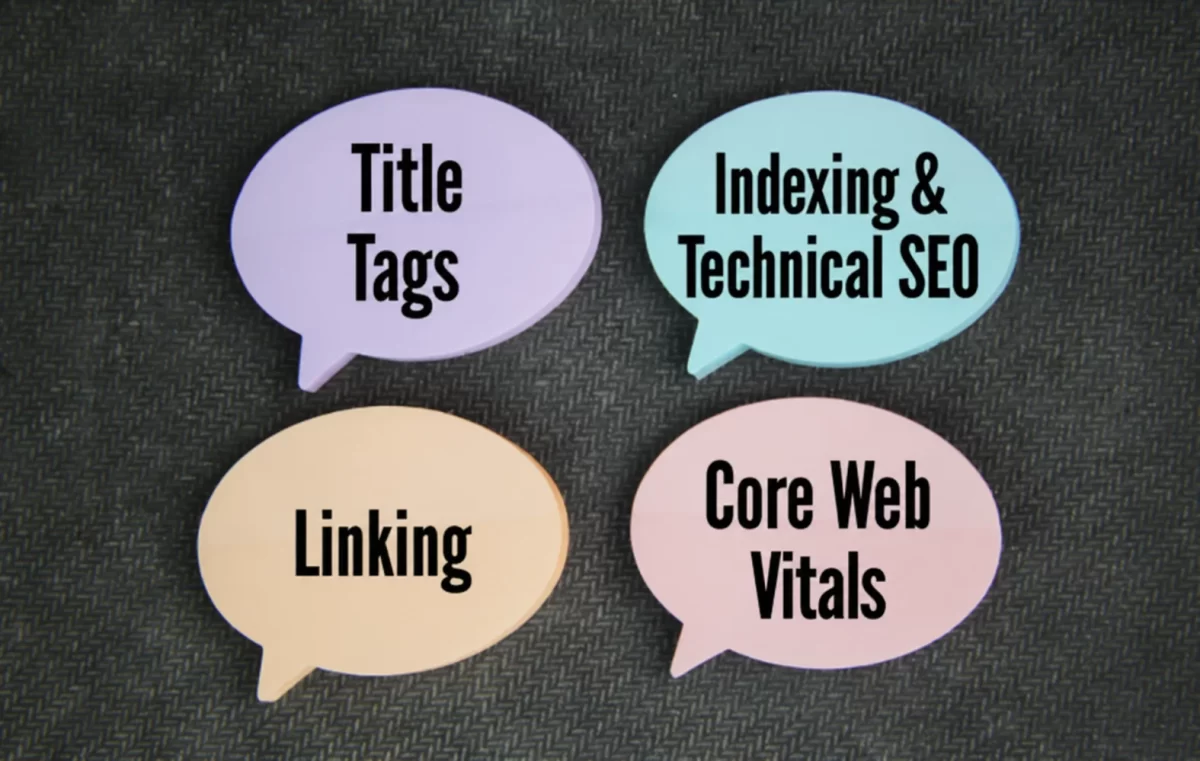
Beyond H1 headings and meta descriptions, there are several other areas worth reviewing when assessing a website’s SEO readiness.
The following are important SEO audit categories that businesses should pay attention to.
3.1 Poorly Optimised Title Tags
Another issue we’ve noticed during our website assessments is that most websites already have title tags in place, but they aren’t always properly optimised.
In many cases, the title tags appear to have been automatically generated using default settings or templates from SEO plugins installed on the website.
For example, a business homepage might have a title tag such as:
Home – Company Name
While this technically provides a title for the page, it doesn’t clearly describe the business’s services or include relevant search terms.
A more descriptive title might be:
Web Design Company in Kuala Lumpur – BrandSwift
Title tags help search engines and users understand a webpage’s main topic. Although SEO plugins can simplify title tag management, businesses still need to review and customise their titles to ensure they accurately reflect each page’s content.
Google may also use other page elements when generating the title displayed in search results, so keeping the title tag, main heading and page content consistent can help communicate the page’s purpose more clearly.
3.2 Weak Internal Linking
Internal links connect related pages within a website, helping visitors and search engines discover relevant content.
When important pages are difficult to reach through internal links, they may be harder for users and search engines to find.
A well-organised internal linking structure also helps establish relationships between related topics, which can support content discovery and provide clearer context for search engines and AI-powered search systems.
3.3 Missing Image Alt Text
Alternative text (alt text) describes images and helps improve accessibility, particularly for people using screen readers.
It also gives Google more context about the image and how it relates to the surrounding content.
Not every decorative image requires descriptive alt text, but informative images should generally include meaningful descriptions. This can support accessibility and image search optimisation.
3.4 Poor Core Web Vitals and Website Performance
Website performance is another important SEO factor that businesses should not overlook.
A website may have well-written content, properly optimised headings and relevant keywords, but poor loading performance can still affect the overall user experience.
Google uses Core Web Vitals as part of its ranking systems. These metrics evaluate three aspects of user experience:
- Largest Contentful Paint (LCP): Measures how quickly the main content becomes visible.
- Interaction to Next Paint (INP): Measures how responsive a webpage is when users interact with it.
- Cumulative Layout Shift (CLS): Measures how much visible content unexpectedly shifts while the page is being used.
In our experience at BrandSwift, we’ve encountered websites where slow server responses and website performance issues appeared to affect Google’s ability to crawl certain pages efficiently.
In some cases, Googlebot experienced difficulties accessing pages, suggesting that website performance problems may go beyond user experience and affect how efficiently search engines can discover and process website content.
However, it is important to distinguish between slow page loading and actual crawling problems. A slow website does not automatically mean Google cannot crawl or index its pages. The impact depends on factors such as server response times, timeouts and whether Googlebot can successfully retrieve the content.
Businesses should therefore assess their website performance using tools such as Google PageSpeed Insights and Google Search Console. In particular, Google Search Console’s Crawl Stats report can help identify slow response times, server errors and other issues affecting Google’s crawling activity.
Improving website performance should focus not only on achieving better speed scores, but also on ensuring that important pages remain accessible to search engines and provide a good experience for visitors.
3.5 Indexing and Technical SEO Problems
Technical SEO issues can sometimes prevent important pages from being crawled or indexed as intended.
These may include incorrect noindex directives, canonical configuration problems or other technical restrictions.
Unlike a missing meta description, an indexing issue can directly prevent an intended page from appearing in Google Search.
For that reason, businesses should prioritise technical SEO problems based on their actual impact rather than treating every issue as equally important.
Does Installing an SEO Plugin Mean a Website Is Optimised?
Not necessarily.
SEO plugins such as Yoast SEO and Rank Math can help website owners manage title tags, meta descriptions, XML sitemaps and other SEO settings.
However, installing a plugin doesn’t automatically mean every page is properly optimised.
Businesses still need to review their headings, content, internal links and technical configurations to ensure their websites are accessible and relevant to their target audience.
For example, a website may have an SEO plugin installed but still contain generic page titles, missing meta descriptions or poorly structured content.
SEO tools can simplify optimisation tasks, but they don’t replace the need for a proper SEO strategy and regular website reviews.
What Do These Findings Tell Us About Website SEO in Malaysia?

One observation from our assessments is that having a professionally designed website does not necessarily mean the website has been properly optimised for search engines.
A website can look modern, function well on mobile devices and contain useful information while still overlooking basic on-page SEO elements.
Our findings also raise a broader question about when SEO is considered during website development.
In our view, SEO should not be treated as something businesses only think about after launching their websites.
Basic considerations such as heading structure, page titles, content organisation and internal linking can be incorporated during the planning and development stages.
This doesn’t mean every website needs an advanced SEO strategy from day one. However, establishing a sound foundation can make future optimisation work more straightforward.
Why Are Basic SEO Issues Still So Common?
One question that came to mind during our assessments was why so many websites still overlook fundamental SEO elements such as H1 headings and meta descriptions.
There could be several reasons.
Some websites may have been developed with a greater focus on visual design and functionality, while SEO was considered only after the website was launched.
Others may have been built using website templates or content management systems without properly reviewing the SEO settings for individual pages.
Another possibility is that businesses assume their websites are already search-engine-friendly simply because they look professional and function correctly.
While our assessments don’t establish the exact reasons behind these issues, they highlight why SEO should be considered throughout website planning, development and ongoing maintenance.
A website doesn’t necessarily need an advanced SEO strategy from the beginning, but getting the fundamentals right can provide a stronger foundation for future optimisation.
Which SEO Problems Should Businesses Fix First?
Not every SEO issue has the same level of importance.
For example, a missing meta description and a page accidentally blocked from indexing are very different problems.
Businesses should prioritise SEO improvements based on their potential impact, the importance of the affected pages and the resources required to resolve them.
| SEO issue | Suggested priority | Reason |
|---|---|---|
| Important pages unintentionally blocked from indexing | Critical | Can prevent pages from appearing in search results |
| Poor internal linking | Medium-High | Can affect page discovery and navigation |
| Missing or unclear page titles | High | Can affect how page relevance is communicated |
| Severe website performance / Core Web Vitals problems | High | Can negatively affect user experience and contribute to weaker search performance |
| Missing or unclear main headings | Medium | Helps clarify content structure and page purpose |
| Missing or weak meta descriptions | Medium | Can affect search result presentation |
| Missing informative image alt text | Context-dependent | Affects accessibility and image understanding |
These priorities are general recommendations. An individual website audit may identify different priorities depending on the site’s condition and business goals.
What Malaysian Businesses Can Learn
For us, one of the more interesting takeaways is that SEO problems don’t always involve complicated technical issues.
Sometimes, they begin with basic elements that were overlooked during the website development process.
Our assessments suggest three practical lessons.
First, website design and SEO should work together. A visually appealing website is valuable, but its content, structure and technical setup should also support search visibility.
Second, basic SEO deserves attention. Clear headings, descriptive page titles and useful meta descriptions may seem straightforward, but they contribute to how users and search engines understand a website.
Third, SEO should be reviewed regularly. Websites change over time. New pages are added, content is updated and technical changes can introduce problems that weren’t present during launch.
A periodic SEO assessment can help businesses identify these issues before they become more difficult to manage.
What Do These Problems Mean for AI Search?
With the growing use of AI-powered search experiences, such as Google AI Overviews and ChatGPT Search, businesses are also beginning to consider how their websites can be discovered and referenced by AI systems.
This is where Answer Engine Optimisation (AEO) and Generative Engine Optimisation (GEO) become relevant.
Although these terms are often discussed separately from traditional SEO, many of the fundamentals overlap.
For example, a website with unclear headings, poorly organised content and weak internal linking may make it more difficult for visitors and systems processing the content to identify relevant information.
A well-structured website, on the other hand, can make its main topics, services and supporting information easier to understand.
However, improving these elements does not automatically guarantee visibility or citations in AI-generated answers. AI search systems use different retrieval and content selection methods, and there is no single optimisation technique that guarantees inclusion.
For Malaysian businesses, the practical takeaway is that SEO and AI search optimisation should not be treated as entirely separate activities.
Creating useful content, organising information clearly and ensuring important pages are accessible remain sensible foundations for both traditional and AI-powered search experiences.
Does Fixing These Problems Guarantee Rankings?
Not necessarily.
Fixing SEO issues can improve a website’s technical foundation, content structure and user experience, but it doesn’t automatically guarantee higher Google rankings.
For example, correcting an indexing problem may allow an important page to become eligible to appear in search results. Improving an H1 heading can make the page’s topic clearer, while rewriting a meta description may improve how the page is presented in search snippets.
These improvements serve different purposes.
Search rankings also depend on factors such as content relevance, competition and how well a webpage satisfies users’ search intent.
For businesses, the goal of an SEO audit should be to identify problems that matter and prioritise improvements based on their potential impact, rather than simply trying to achieve a perfect SEO audit score.
Conclusion
BrandSwift’s assessments of Malaysian business websites suggest that basic on-page SEO issues remain common among businesses seeking website optimisation services.
Some of the most frequently observed problems involved H1 headings and meta descriptions, highlighting how fundamental SEO elements can be overlooked during website development.
However, fixing these issues alone does not guarantee better search rankings. Businesses also need to consider content quality, website performance, technical accessibility and how well their websites meet users’ needs.
As traditional and AI-powered search continue to evolve, these fundamentals remain important.
For Malaysian businesses, the key takeaway is that SEO should be considered throughout website development and ongoing maintenance, rather than treated as an afterthought.
At BrandSwift, we believe a well-designed website should not only look professional but also provide a strong foundation for search visibility, usability and long-term growth.
Frequently Asked Questions
What are the most common SEO problems found on Malaysian business websites?
Based on BrandSwift’s assessments of 86 Malaysian business websites, the two most frequently identified issues were meta description problems (82.6%) and missing or improperly configured H1 headings (79.1%).
Other important SEO areas businesses should review include title tags, internal linking, website performance and indexing configuration.
Does a missing H1 heading affect SEO?
A missing H1 heading does not automatically cause a ranking penalty. However, a clear main heading can help visitors and search engines understand a webpage’s primary topic. Businesses should use descriptive headings that accurately reflect their content.
Are meta descriptions important for SEO?
Yes, meta descriptions can help communicate what a webpage offers in search results. They are not a direct Google ranking factor, and Google may generate snippets from page content instead. Well-written descriptions can nevertheless improve how a page is presented to potential visitors.
How can I check whether my website has SEO problems?
Businesses can start by reviewing their page titles, headings, meta descriptions, internal links and indexing status. Tools such as Google Search Console and PageSpeed Insights can provide additional information about search performance and website usability.
How often should businesses conduct an SEO audit?
There is no fixed schedule suitable for every website. Businesses should review their SEO periodically and after significant website changes, such as redesigns, migrations or major content updates. Websites that frequently publish or update content may benefit from more regular assessments.
Do H1 headings and website structure matter for AI Search?
Yes. Clear headings and a logical website structure help organise content and communicate its main topics.
For AEO and GEO, businesses should also provide relevant answers, useful information and accessible content. However, properly structured headings alone do not guarantee that a website will appear in AI-generated answers or receive citations from AI search platforms.
About BrandSwift
BrandSwift is a Kuala Lumpur-based web design and SEO company with over 13 years of experience helping businesses build and improve their online presence.
Our services include website design, development, search engine optimisation and ongoing website maintenance.
Through our work with Malaysian businesses, we aim to share practical insights based on real website assessments and project experience.