How to Build an Efficient Digital Marketing Funnel
Introduction
In the era of digital marketing, traffic no longer equates to sales. More and more businesses are finding that even with advertising budgets, social media management, and content marketing articles, stable conversions are difficult to achieve without a systematic structure to guide users. Therefore, building a clear and effective digital marketing funnel has become a key foundation for business growth.
A well-designed marketing funnel is more than just attracting attention, it’s a complete path that helps potential customers move from “knowing you” to “trusting you,” ultimately leading to a purchase and the establishment of a long-term relationship. At the same time, in designing the funnel, businesses must understand how to create effective marketing campaigns so that each stage delivers its true value.
What is a marketing funnel?
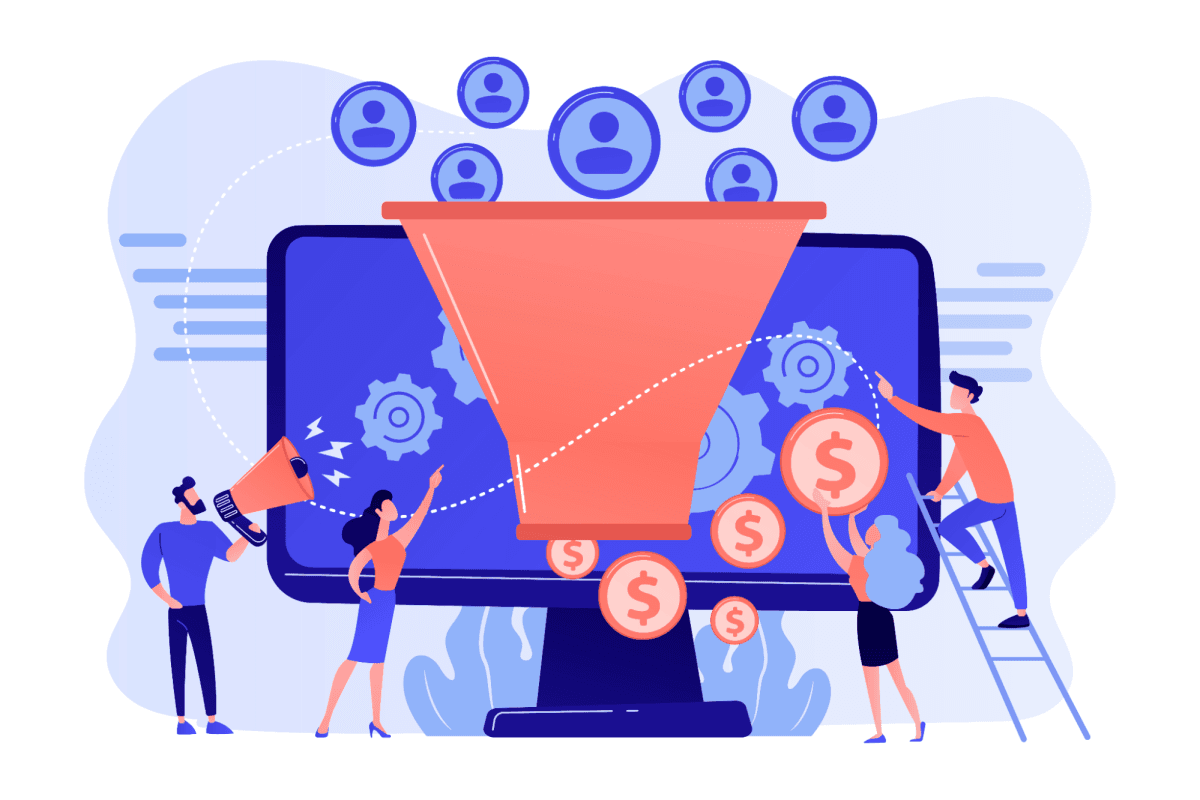
A marketing funnel is a model for managing potential customers in stages, from their first contact with the brand to their final purchase or referral. It’s called a funnel because a certain percentage of customers drop off at each stage, ultimately leaving a small number who convert.
Traditional marketing funnels typically consist of four main stages:
- Cognition Stage
- Interest Stage
- Consideration Stage
- Action Stage
With the development of digital tools, the marketing funnel has become more refined. For example, businesses can now track user origins, click paths, page dwell time, and conversion behavior to optimize strategies at each stage. The marketing funnel is no longer just a theoretical model, but a practical structure that can be validated and continuously optimized through data.
The Evolution of the Marketing Funnel
In the era of traditional marketing, businesses primarily promoted themselves through television advertising, radio, and print media. The marketing funnel at that time relied heavily on experience and judgment due to a lack of precise data analysis tools. Businesses struggled to determine which advertisements truly generated customers.
With the advent of the internet age, search engines and social media transformed how users access information. Consumers began actively searching for solutions rather than passively receiving advertisements. This behavioral shift propelled the marketing funnel from one-way communication to interactive and data-driven approaches.
Today’s marketing funnel emphasizes:
- Data analytics and behavioral tracking
- Personalized content recommendation
- Automated marketing systems
- Multi-channel integration strategies
Modern marketing is no longer just about exposure, it revolves around user experience and building trust. Businesses must understand users’ real needs, rather than simply pushing products on them.

Why Building an Effective Marketing Funnel is Important for Digital Marketing Strategies
Many businesses, when implementing digital marketing, often focus solely on traffic metrics such as click-through rate or impressions, neglecting backend conversion and customer nurturing processes. This leads to escalating marketing costs while sales growth stagnates.
The importance of building an effective marketing funnel is reflected in the following aspects:
First, improve conversion efficiency.
When each stage has clear goals and supporting content, users are more likely to take the next step.
Second, reduce customer acquisition costs.
A clear funnel structure can reduce invalid traffic and improve advertising ROI.
Third, enhance brand professionalism.
Systematic content and continuous communication can build trust.
Fourth, enhance customer lifetime value.
A marketing funnel focuses not only on the first sale but also on repeat purchases and referrals.
Fifth, help businesses optimize budgets.
Data analysis clearly identifies which stages require increased resource investment.
A well-structured marketing funnel is the core foundation of a digital marketing strategy, not an add-on.
5 Types of Marketing Funnels
Different company sizes, product prices, sales cycles, and industry characteristics all influence the design of marketing funnels. No single funnel structure is suitable for all companies, the key is to understand the buying behavior and decision-making cycle of target customers, and then choose the most appropriate funnel model to build.
1. Linear Sales Funnel
The linear sales funnel is the most basic structural model, progressing through fixed stages with a clear and defined path from lead generation to sale.
Suitable Scenarios:
- Standardized products
- Transparent pricing
- Short decision-making cycles
- Impulsive or low-risk purchases
Advantages:
- Simple structure
- Easy to implement
- Easy to scale
However, if the product involves high amounts of money or complex decisions, relying solely on a linear structure may not be sufficient to build enough trust.
2. Content-Driven Educational Funnel
The content-driven educational funnel centers on “building professional trust” by continuously delivering high-quality content to cultivate potential clients.
Suitable Industries:
- Consulting Services
- Education and Training
- Technology Solutions
- Professional Services
Key features:
- Continuously educate the market through articles, guides, and case studies
- Emphasize long-term value, not short-term sales
- Build brand authority and trust
This model is particularly suitable for businesses with long decision-making cycles.
3. Automated Marketing Funnel
An automated marketing funnel enables scalable follow-up through system tools.
Common tools include:
- Email marketing systems
- Remarketing advertising
- Customer relationship management systems
Core advantages:
- Increased efficiency
- Reduced labor costs
- Automated and continuous nurturing of leads
Automation becomes almost essential as traffic scales up.
4. High-Value Trust Funnel
When product prices are high or solutions are complex, the marketing focus must be on building trust.
Common strategies include:
- Case studies
- Customer testimonials
- One-on-one consultations
- In-depth product explanations
The goal is not to close deals quickly, but to identify truly high-quality customers.
5. Community-Driven Funnel
The community-driven funnel emphasizes interaction and long-term relationship building.
Suitable for:
- Long-term subscription businesses
- Courses and training
- Interest-based and hobby-based products
Core Advantages:
- Increased user engagement
- Enhanced brand loyalty
- Increased repeat purchases and referral rates

What Types of Content are Suitable for Each Stage?
An effective marketing funnel must provide appropriate content at each stage. Content that doesn’t match the stage often leads to user churn.
1. Awareness Stage
The goal is to attract the attention of your target audience and introduce them to your brand for the first time.
Suitable content includes SEO articles, social media posts, short videos, brand stories, industry trend analysis, and introductory knowledge content. The focus at this stage is on exposure and education, not sales. Content must revolve around user questions, not product features.
2. Interest Stage
Once users begin to show interest in your brand, you need to further build initial trust.
Suitable content includes detailed guides, FAQs, white papers, ebooks, instructional videos, and free download resources. You can start introducing solutions at this stage, but the focus should still be on education.
By consistently providing value, users will gradually perceive the brand as a professional and trustworthy source.
3. Consideration Phase
During the consideration phase, users have clarified their needs and begin comparing different options.
Suitable content includes case studies, product comparison analyses, customer testimonials, success stories, and product demonstration videos. This content can help users reduce decision-making risk.
Clear explanations of advantages and real-world examples are crucial factors in improving conversion rates.
4. Action Phase
The goal of this phase is to drive sales.
Suitable content includes limited-time offers, free consultations, trial programs, clear pricing plans, and strong action guidelines. Page design and copy must be concise and clear, minimizing distractions.
Clear action buttons and simple processes can significantly increase conversion rates.
5. Loyalty Phase
The marketing funnel shouldn’t stop at closing the deal. The goal of the loyalty phase is to increase repeat purchases and referrals.
Suitable content includes membership programs, exclusive offers, after-sales support, advanced tutorials, and referral reward mechanisms. Through continuous communication and value provision, customers are more likely to become brand advocates.
Matching content with the phase is key to a successful marketing funnel.
How to Build a Marketing Funnel in 9 Steps
Building a marketing funnel is not a one-time project, it requires systematic planning and continuous optimization
Step 1: Define Business Objectives
First, you must clarify your core objectives: is it to increase brand exposure, expand the number of potential customers, or directly drive sales conversion? Different objectives will influence funnel design.
Step 2: Research Your Target Customers
Through market research and data analysis, understand your customers’ pain points, needs, budgets, and decision-making timelines. Building a clear customer profile helps in accurately targeting content and advertising.
Step 3: Plan the User Journey
Outline the entire user journey from their first contact with the brand to their final purchase. Identify potential questions and obstacles at each stage.
Step 4: Develop a Content Framework
Design corresponding content strategies for different stages. Ensure each stage has a clear theme and objective.
Step 5: Establish Traffic Sources
Acquire target traffic through search engine optimization, advertising, social media, and collaborative promotions. Traffic must be targeted, not simply a matter of quantity.
Step 6: Design a Conversion Mechanism
Set up forms for collecting information, offering free downloads, scheduling consultations, or registering to encourage users to leave their contact information.
Step 7: Set Up Automated Follow-up
Utilize email marketing systems and remarketing ads to continuously nurture potential customers and avoid wasting traffic.
Step 8: Analyze Data Performance
Continuously monitor conversion rate, click-through rate, bounce rate, and cost structure to identify areas for optimization.
Step 9: Continuous Optimization and Adjustment
Based on data feedback, optimize page structure, copywriting, and channel strategies. The marketing funnel is a dynamic system that requires continuous testing and improvement.
Conclusion
In the digital marketing environment, businesses must establish a clearly structured and optimizable marketing funnel to achieve sustainable growth. This not only helps businesses understand the customer decision-making process but also makes marketing activities more logical and efficient.
When the marketing funnel is combined with targeted marketing campaigns, businesses can shift from fragmented promotion to systematic growth. Truly successful digital marketing is not just about getting clicks, but about building long-term trust and stable revenue through structured strategies.